
- Killian's Kustoms and Detailing
Signs Your Vehicle Needs Professional Detailing
A vehicle can look reasonably clean while still showing signs of contamination, surface wear, embedded stains, or material deterioration that routine washing cannot correct. Persistent odors, rough paint, swirl marks, stubborn residue, and neglected interior surfaces often indicate that deeper treatment is required.
Professional detailing addresses these condition-based problems through targeted cleaning, decontamination, correction, and protection rather than basic surface cleaning. This blog explains the key signs your vehicle needs professional detailing and when a standard car wash is no longer enough.
Signs Your Vehicle’s Exterior Needs Professional Detailing
Exterior detailing becomes necessary when contamination or surface defects remain after ordinary washing. The condition of the paint, glass, wheels, and trim often reveals whether the vehicle requires more specialized treatment.
The Paint Feels Rough Even After Washing
Clean automotive paint should generally feel smooth after loose dirt has been removed. If the surface still feels gritty or textured, bonded contaminants may be attached to the clear coat. Common sources include industrial fallout, road film, overspray, tree sap residue, and microscopic particles that conventional shampoo cannot safely remove.
Professional detailers can use chemical decontamination, clay treatment, or other surface-specific methods to remove these particles before polishing or applying protection. Continuing to scrub contaminated paint aggressively can increase the risk of fine scratches and additional clear-coat damage.
Water Spots, Bird Droppings, Or Tree Sap Will Not Come Off
Persistent water spots and organic deposits are more than cosmetic problems. Mineral-rich water can leave deposits behind as it evaporates, while bird droppings and tree sap may chemically interact with painted surfaces when left in place.
If routine washing no longer removes the marks, the contamination may require targeted chemical treatment or polishing. Delaying treatment can allow staining or etching to become more difficult to correct, particularly when the vehicle is repeatedly exposed to sunlight and heat.
The Paint Looks Dull, Hazy, Or Covered In Fine Swirls
Dullness often develops when microscopic scratches and surface defects interfere with the way light reflects from the clear coat. Improper washing techniques, automatic car washes, dirty towels, and repeated environmental exposure can gradually create visible swirl marks or haze.
Professional polishing or paint correction can reduce certain defects by refining the clear-coat surface. The correct level of correction depends on defect depth, paint condition, and remaining clear-coat thickness, so aggressive polishing should not be treated as routine cleaning.
Wheels, Trim, And Exterior Details Stay Dirty After A Wash
Brake dust can bond strongly to wheel surfaces, while road grime collects around emblems, trim edges, wheel wells, and other areas that quick washes often miss. Black plastic trim may also become stained or faded after prolonged environmental exposure.
Detailing targets these areas with suitable cleaners, brushes, and surface treatments. The objective is not simply to make the vehicle appear cleaner from a distance, but to remove accumulated contamination from components that require different cleaning methods.
Signs Your Vehicle’s Interior Needs Deep Detailing
Interior surfaces accumulate contamination differently from exterior panels. Fabrics absorb liquids, textured materials trap debris, and high-contact areas gradually collect oils, dust, food residue, and other contaminants.
Did You Know? Interior contamination often extends below the visible surface. Spills can penetrate upholstery and carpet padding, while body oils and fine debris settle into textured materials and seams, which is why surface wiping may leave the underlying source of stains, odors, and grime untreated.
Stains Keep Reappearing On Seats Or Carpets
A stain that returns after cleaning often indicates that contamination remains deeper within the fabric, carpet fibers, or padding. Surface wiping may temporarily improve appearance without fully extracting the material responsible for discoloration.
Professional interior detailing may involve fabric-safe agitation, hot-water extraction, steam, or targeted stain treatment depending on the upholstery. Using excessive moisture or strong chemicals without considering the material can create water marks, discoloration, or slow drying.
Persistent Odors Remain After Cleaning
Air fresheners can conceal unpleasant smells temporarily, but recurring odors usually indicate that the source remains inside the vehicle. Smoke residue, spilled drinks, food, pet contamination, and moisture can penetrate carpets, upholstery, headliners, or ventilation areas.
A professional detail focuses on source removal rather than fragrance. Cleaning contaminated surfaces and identifying moisture or residue buildup generally provides a more durable result than repeatedly masking the smell.
Dirt Has Built Up In Crevices And High-Touch Areas
Cup holders, seat rails, air vents, steering wheels, buttons, seams, and console edges accumulate debris that routine vacuuming often leaves behind. These areas may also hold body oils and sticky residue that attract additional dirt.
Detailed interior cleaning uses smaller brushes, vacuum attachments, microfiber tools, and material-compatible cleaners to reach narrow areas. Visible buildup around controls and seams is a practical sign that routine maintenance has fallen behind.
Leather, Vinyl, Or Plastic Looks Dry, Faded, Or Grimy
Different interior materials require different treatment. Leather can collect oils and soil within textured surfaces, while vinyl and plastics may become dull from contamination, UV exposure, or inappropriate cleaning products.
Professional detailing allows each material to be cleaned with products designed for its finish and condition. Where suitable, conditioning or protective treatments can follow cleaning, but they should not be used to conceal dirt that has not first been removed.
Environmental And Usage Signs That Detailing Is Overdue
Some vehicles need detailing sooner because of where and how they are used. Exposure patterns can accelerate contamination even when mileage or time since the last detail seems relatively low.
Your Vehicle Is Regularly Exposed To Harsh Outdoor Conditions
Vehicles parked outside experience repeated contact with sunlight, rain, pollen, airborne contaminants, road salt, dust, and other environmental material. These substances can accumulate on paint, glass, trim, and protective coatings.
Frequent exposure can shorten the effective life of waxes and sealants and increase the amount of bonded contamination present. Detailing becomes especially relevant when washing no longer restores a smooth, uniform finish.
Pets, Children, Or Frequent Passengers Create Heavy Interior Wear
High-use interiors collect hair, crumbs, spills, soil, fingerprints, and debris more quickly than lightly used vehicles. Pet hair can become embedded in carpeting, while repeated spills may migrate beneath upholstery surfaces.
When routine vacuuming cannot keep these contaminants under control, deeper interior detailing can restore areas that ordinary maintenance cannot reach effectively.
The Vehicle Has Gone Months Without More Than A Basic Wash
Basic washing removes surface dirt but does not address every maintenance need. Over time, brake dust, bonded paint contamination, interior residue, and debris in crevices can accumulate even if the vehicle receives occasional washes.
A long interval without deeper cleaning is therefore a useful warning sign, particularly when several surfaces begin showing deterioration at the same time.
When A Car Wash Is No Longer Enough
A car wash and professional detailing solve different problems. Washing is primarily maintenance, while detailing is appropriate when contamination, deterioration, or cosmetic defects require specialized treatment.
Did You Know? A vehicle can look clean after a wash while still holding bonded contaminants, embedded residue, and fine surface defects that washing alone cannot remove. Professional detailing goes deeper by treating the specific condition of the paint, trim, wheels, glass, and interior materials.
The Same Problems Return Immediately After Washing
If stains, rough paint, wheel contamination, or dull surfaces remain after repeated washes, additional washing is unlikely to resolve the underlying issue. The problem may involve bonded contaminants, embedded material, or surface defects rather than loose dirt.
Repeatedly applying stronger pressure or harsher chemicals can increase the risk of damage without producing a better result. At this stage, the treatment method should change rather than simply increasing wash frequency.
The Vehicle Looks Clean But Still Feels Neglected
A freshly washed vehicle may still have faded trim, stained upholstery, dirty seams, rough paint, or persistent odors. These conditions demonstrate the difference between visible cleanliness and overall surface condition.
Professional detailing evaluates individual materials and contamination types so treatment can be matched to the actual problem rather than applying one cleaning process everywhere.
You Are Trying To Correct Rather Than Simply Maintain The Vehicle
Maintenance removes ordinary dirt before it becomes difficult to manage. Correction addresses existing problems such as paint haze, embedded contamination, staining, or material deterioration.
Once the objective changes from keeping the vehicle clean to restoring its condition, professional detailing becomes the more appropriate service category.
When You Should Schedule Professional Detailing
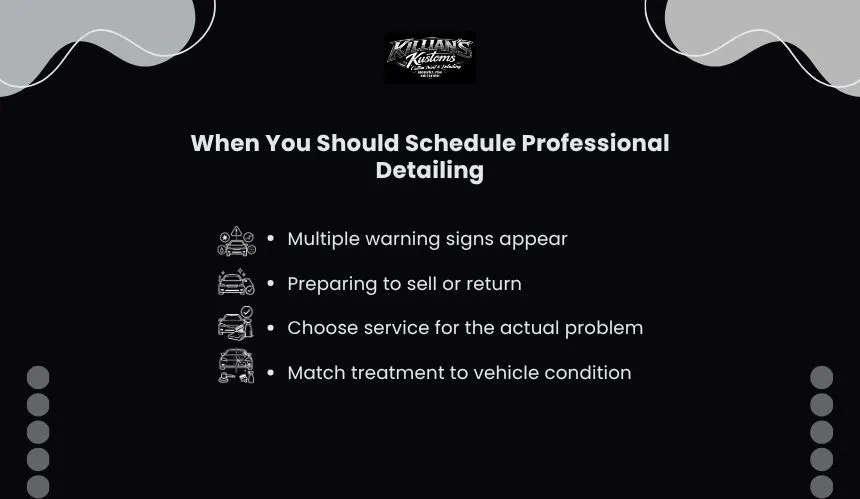
The strongest reason to schedule detailing is not a fixed calendar interval. It is the presence of specific conditions that routine maintenance can no longer resolve efficiently or safely.
Multiple Exterior Or Interior Warning Signs Appear Together
A combination of rough paint, wheel buildup, stains, odors, faded trim, and neglected crevices usually indicates that several surfaces need different treatments. Addressing each problem individually through repeated basic cleaning can become inefficient.
A comprehensive detail can coordinate cleaning, decontamination, correction, and protection according to the vehicle’s overall condition.
You Are Preparing To Sell, Return, Or Preserve The Vehicle
Detailing can be particularly useful before selling a vehicle, completing a lease return, or beginning a long-term preservation routine. Cleaner upholstery, corrected surface defects, and properly maintained exterior materials can improve presentation and make the vehicle’s condition easier to evaluate.
The service should focus on correctable issues rather than attempting to disguise permanent wear or mechanical problems.
Choose The Detailing Service Based On The Actual Problem
Not every vehicle needs the most extensive detailing package. Interior detailing is more appropriate for stains, odors, pet hair, and embedded cabin contamination. Exterior detailing targets bonded contaminants, wheels, trim, paint, and glass.
Paint correction is a separate consideration for swirl marks, haze, and certain clear-coat defects. Matching the service to the vehicle’s actual condition prevents unnecessary treatments while ensuring the problems that prompted the detail are properly addressed.
Professional detailing is most valuable when visible or functional signs show that ordinary washing has reached its limit. Evaluating the vehicle by surface condition, contamination level, usage, and desired outcome provides a more reliable decision than following a generic detailing schedule.
Frequently Asked Questions
How often should I get my car professionally detailed if it still looks clean?
There is no universal detailing interval. Frequency should reflect parking conditions, mileage, climate, passenger use, and the protection already on the vehicle. Daily drivers exposed to weather or heavy interior use generally need attention sooner than garage-kept vehicles. Condition-based scheduling is more reliable than following a fixed calendar.
Does a brand-new car actually need professional detailing?
A new vehicle can still benefit from detailing if it has transport residue, dealer-installed swirl marks, water spots, adhesive contamination, or poorly prepared paint. New paint does not automatically mean defect-free paint. An inspection before polishing or coating determines whether decontamination, light correction, or protection is actually necessary.
Can professional detailing remove scratches, or does it only hide them?
Professional detailing can reduce or remove some clear-coat scratches through compounding and polishing, but it cannot safely erase every defect. Deep scratches that penetrate beyond the clear coat may require touch-up paint or body repair. Defect depth should be assessed before correction because abrasive polishing removes surface material.
Is ceramic coating worth adding after a professional detail?
Ceramic coating makes the most sense when the paint has first been cleaned, decontaminated, and brought to the desired finish. The coating provides longer-term surface protection and easier maintenance, but it does not repair scratches underneath it. Preparation quality and realistic durability expectations matter when comparing ceramic coating packages.
Does professional detailing actually increase a car’s resale value?
Detailing can strengthen resale presentation by removing contamination, stains, odors, and visible signs of neglect, although it cannot guarantee a specific price increase. Vehicle condition influences buyer and trade-in evaluations, and Kelley Blue Book recommends thorough cleaning or professional detailing when preparing a vehicle for sale.
How do I know whether I need a full detail or just one specific service?
Choose the service around the vehicle’s problem rather than the package name. Interior-only detailing suits cabin contamination, while exterior detailing addresses paint, wheels, glass, and exterior surfaces. A full detail becomes more practical when both areas require corrective work. Request an inspection-based recommendation before paying for bundled treatments you may not need.