
- Killian's Kustoms and Detailing
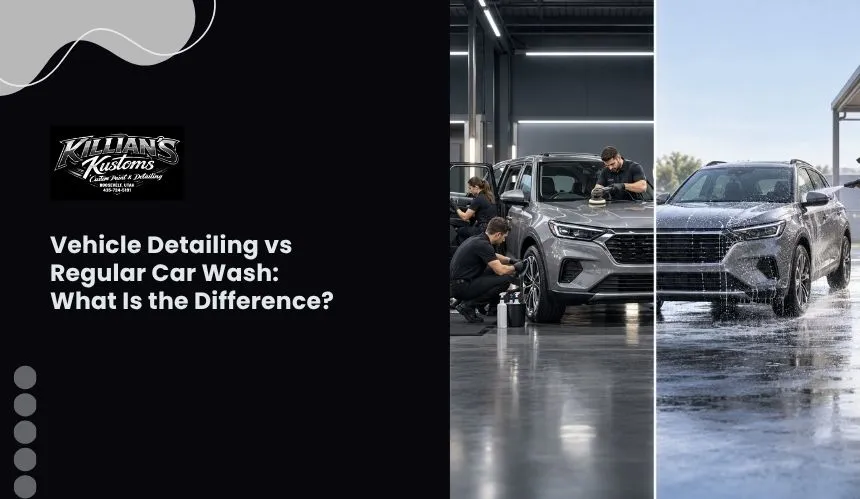
Vehicle Detailing vs Regular Car Wash: What Is the Difference?
A regular car wash removes surface dirt, but it does not provide the same level of cleaning, correction, or protection as professional vehicle detailing. The distinction becomes important when a vehicle has embedded contaminants, interior buildup, dull paint, stains, or surfaces requiring specialized treatment.
Choosing the wrong service can mean paying for unnecessary work or leaving problems unresolved. Understanding the differences in scope, process, results, cost, and purpose makes it easier to choose the right level of vehicle care.
Vehicle Detailing vs Regular Car Wash: The Key Difference
A regular car wash is designed for routine surface cleaning, while vehicle detailing provides deeper and more targeted care. Detailing may address both cosmetic condition and surface protection, while a conventional wash primarily removes current exterior contamination.
What Does a Regular Car Wash Typically Include?
A regular car wash removes loose dirt, dust, pollen, road film, mud, and other surface contaminants. Depending on the package, it may include pre-rinsing, soap application, washing, rinsing, drying, tire dressing, and a basic spray wax.
Automated washes prioritize speed and consistency, while hand washes provide greater control over sensitive surfaces. Neither format normally includes extensive paint correction, deep interior cleaning, or targeted decontamination.
What Does Vehicle Detailing Typically Include?
Vehicle detailing is a more comprehensive process that can address paint, wheels, tires, trim, glass, carpets, upholstery, leather, plastics, vents, crevices, and other high-contact surfaces.
Exterior detailing may include decontamination, clay treatment, machine polishing, waxing, sealant application, or other protective treatments. Interior detailing can involve deep vacuuming, stain treatment, upholstery extraction, leather conditioning, and detailed surface cleaning.
Vehicle Detailing vs Regular Car Wash Comparison
The table below highlights the practical differences between the two services.
Comparison Factor | Regular Car Wash | Vehicle Detailing |
Primary Purpose | Routine removal of surface dirt | Deep cleaning, cosmetic improvement, and surface care |
Exterior Cleaning | Basic wash, rinse, and dry | Detailed cleaning and contamination removal |
Interior Cleaning | Limited or optional vacuuming and wiping | Deep cleaning of carpets, seats, trim, vents, and surfaces |
Paint Decontamination | Usually not included | May include clay or chemical decontamination |
Paint Correction | Not typically included | May include polishing for minor defects |
Stain Treatment | Usually limited | Targeted stain and upholstery treatment |
Surface Protection | Basic spray wax may be available | Wax, sealant, or coating options may be available |
Time Required | Usually shorter | Longer due to detailed labor |
Cost Level | Lower | Higher depending on condition and services |
Best For | Routine maintenance | Neglected vehicles, deep cleaning, appearance improvement, or protection |
How the Cleaning Process Differs
The difference between washing and detailing becomes clearer when the cleaning methods are compared. A wash removes general contamination, while detailing identifies specific problems and applies processes suited to the affected material.
Surface Cleaning vs Deep Cleaning
Surface cleaning focuses on contaminants that can be removed with water, detergent, and physical agitation. It is effective for fresh dirt and normal road grime but may leave behind bonded particles, embedded stains, odors, or residue trapped in crevices.
Deep cleaning uses additional tools and specialized products to treat contamination that standard washing cannot remove. Depending on the vehicle, this can involve carpet extraction, steam treatment, clay decontamination, or material-specific chemical cleaning.
Exterior Treatment Differences
A standard wash generally ends after cleaning, rinsing, and drying, sometimes with a basic wax or tire treatment. It does not normally address oxidation, bonded fallout, tar deposits, rough paint texture, or visible paint defects.
Exterior detailing can add mechanical or chemical decontamination before polishing and protection. Polishing may improve paint clarity and reduce the appearance of minor surface imperfections, while waxes and sealants provide additional environmental protection.
Interior Treatment Differences
Many car washes offer quick vacuuming and basic surface wiping. These services remove loose debris but are not designed for deeply embedded contamination.
Interior detailing treats surfaces according to their material and condition. Fabric seats may require extraction, leather can require specialized cleaners and conditioners, and plastic or vinyl surfaces need products that remove contamination without damaging the finish.
How the Results of Detailing and Car Washing Compare
The final result reflects the depth of treatment. A regular wash improves immediate cleanliness, while detailing can influence appearance, surface condition, and protection more extensively.
Important: A clean-looking vehicle is not necessarily fully treated. If bonded contaminants, paint defects, or embedded interior residue remain, a standard wash may improve appearance temporarily without resolving the underlying surface condition.
Appearance and Finish
After a regular car wash, the vehicle should appear cleaner because loose contamination has been removed. However, dullness, light oxidation, bonded contaminants, swirl marks, or interior staining can remain visible.
Detailing can produce a more refined finish by addressing these conditions individually. Paint may appear smoother and clearer after decontamination and polishing, while interior materials can regain a more consistent appearance after deeper cleaning.
Vehicle Protection
Some car washes apply spray waxes or drying aids that provide temporary water repellency and gloss. These treatments are primarily designed for routine maintenance.
Detailing may include more durable waxes, synthetic sealants, or ceramic-based protection. Interior conditioners and protectants may also be applied to appropriate materials to reduce premature drying, fading, or deterioration.
How Long Do the Results Last?
Car wash results can diminish quickly because the process mainly removes contamination currently sitting on the surface. Driving conditions, weather, outdoor parking, and road exposure determine how quickly dirt returns.
Detailing results may remain noticeable longer because deeper contamination has been removed and protective products may have been applied. Their longevity still depends on subsequent washing practices, storage conditions, and vehicle use.
Cost, Time, and Service Depth
Detailing generally requires more time and costs more because it involves additional labor, specialized equipment, and condition-specific treatment. Comparing prices without comparing included procedures can therefore be misleading.
Why Does a Regular Car Wash Cost Less?
Regular car washes use standardized processes designed for efficient vehicle turnover. Automated equipment, predefined packages, and limited individual surface treatment reduce labor requirements.
This makes regular washing practical for ongoing maintenance when the vehicle only needs routine exterior cleaning.
Why Does Vehicle Detailing Cost More?
Detailing requires technicians to inspect and treat individual areas rather than applying the same process to every surface. Specialized chemicals, extractors, polishers, steam equipment, brushes, and protective products may be required.
The cost therefore reflects service complexity, labor requirements, and vehicle condition rather than simply the number of items included in a package.
What Affects the Final Detailing Price?
Vehicle size, paint condition, interior contamination, pet hair, staining, odors, tree sap, tar, brake dust, and selected protection services can influence the final cost.
A lightly maintained sedan generally requires less labor than a heavily neglected SUV. Quotes should therefore be compared according to included procedures and expected outcomes.
When Should You Choose Detailing Instead of a Regular Car Wash?
The correct service depends on the vehicle’s condition and the result you want. Routine dirt rarely requires extensive detailing, while deeper contamination may remain even after repeated washing.
Did You Know? Repeated washing may improve surface cleanliness without removing bonded contaminants such as rail dust, tar, mineral deposits, or embedded brake residue. These often require decontamination methods used during professional detailing rather than another standard wash.
Choose a Regular Car Wash When
A regular wash is usually sufficient when the vehicle has ordinary dust, pollen, light mud, or fresh road grime. It is also appropriate for maintaining a vehicle that has recently received more extensive detailing.
Choose this option when routine cleanliness, convenience, and shorter service time are the primary priorities.
Choose Vehicle Detailing When
Detailing is more appropriate when the vehicle has noticeable stains, odors, embedded debris, heavily contaminated wheels, rough paint, reduced gloss, or neglected interior surfaces.
It is also useful when separate materials require different cleaning methods or when the desired outcome includes cosmetic refinement or protective treatment.
When Can Detailing Deliver More Value?
Detailing can be useful before selling or trading a vehicle because a cleaner and better-presented vehicle can create a stronger impression during inspection.
It can also make practical sense after extended travel, heavy seasonal exposure, purchasing a used vehicle, or before applying longer-term paint protection that requires a properly prepared surface.
How to Decide Which Service Your Vehicle Actually Needs
The best choice should be based on vehicle condition, maintenance goals, and the specific result required. Evaluating those factors first reduces unnecessary spending and prevents under-treating existing problems.
Evaluate the Vehicle’s Current Condition
Determine whether the issue is limited to loose exterior dirt or extends to rough paint, interior contamination, stains, odors, wheels, trim, or hard-to-reach areas.
If routine washing resolves the problem, additional treatment may not be necessary. If contamination remains, detailing is more likely to provide the required level of cleaning.
Match the Service to Your Desired Outcome
Choose a car wash when the goal is routine cleanliness. Choose detailing when the desired result includes deep cleaning, stain removal, paint refinement, material conditioning, decontamination, or longer-lasting protection.
Defining the desired result before selecting a service makes different packages easier to evaluate.
Compare Services by What Is Included
Terms such as premium wash, full detail, or deluxe detail are not standardized across service providers. Two businesses can use the same package name while offering substantially different procedures.
Check whether the quoted service includes interior treatment, paint decontamination, polishing, stain removal, surface protection, or additional charges for excessive contamination. The right service is the one that addresses the vehicle’s actual condition without adding procedures that do not contribute to the desired outcome.
Frequently Asked Questions
Can an automatic car wash cause swirl marks or scratches?
Automatic washes that use rotating brushes or reused cleaning materials can introduce fine swirl marks when abrasive dirt becomes trapped against the paint. Touchless washes reduce physical contact but may rely on stronger detergents. Paint-sensitive vehicles often benefit from controlled hand washing with clean microfiber towels and proper lubrication.
Does a brand-new car still need professional detailing?
New vehicles can arrive with rail dust, adhesive residue, water spots, dealership wash marks, or transportation contaminants despite having very low mileage. A new-car detail can remove these defects and properly prepare paint, glass, wheels, and trim before applying wax, paint sealant, or ceramic protection.
How often should a daily-driven vehicle be professionally detailed?
Detailing frequency depends on mileage, parking conditions, climate exposure, interior use, and maintenance habits. Many daily drivers benefit from periodic deep detailing rather than frequent full-service treatments. Vehicles exposed to outdoor parking, pets, children, road salt, heavy commuting, or industrial fallout may require professional attention more often.
Can detailing remove scratches, water spots, and paint oxidation?
Detailing can improve certain surface defects, but results depend on their depth and severity. Machine polishing may reduce light scratches, oxidation, mineral deposits, and swirl marks within the clear coat. Scratches that penetrate through the clear coat or paint layer usually require touch-up paint, refinishing, or bodywork instead.
Is detailing safe for matte paint, vinyl wraps, or paint protection film?
Specialty finishes require different products and techniques from conventional gloss paint. Abrasive polishing can alter matte finishes, while harsh chemicals may affect vinyl edges or protective films. A detailer should identify the surface first and use compatible cleaners, protectants, pressure levels, and drying methods designed for that specific material.
Is mobile detailing as effective as detailing at a professional shop?
Mobile detailing can deliver comparable cleaning results when the technician has adequate lighting, water, power, equipment, and weather protection. Shop-based detailing may be better for intensive paint correction, coating installation, or controlled curing because technicians can regulate lighting, temperature, humidity, contamination, and workspace conditions more consistently.