
- Killian's Kustoms and Detailing
What Is Included in a Complete Vehicle Detail?
A complete vehicle detail goes beyond a basic wash and vacuum by addressing exterior contamination, interior buildup, surface condition, and protective finishing. The challenge is that detailing packages vary widely, so the term “complete detail” does not always mean the same level of service.
Knowing what should be included helps you compare packages, avoid unnecessary add-ons, and set realistic expectations. This blog explains what a complete vehicle detail typically includes, what may cost extra, and how to judge whether a package matches your vehicle’s condition.
What Does A Complete Vehicle Detail Include?
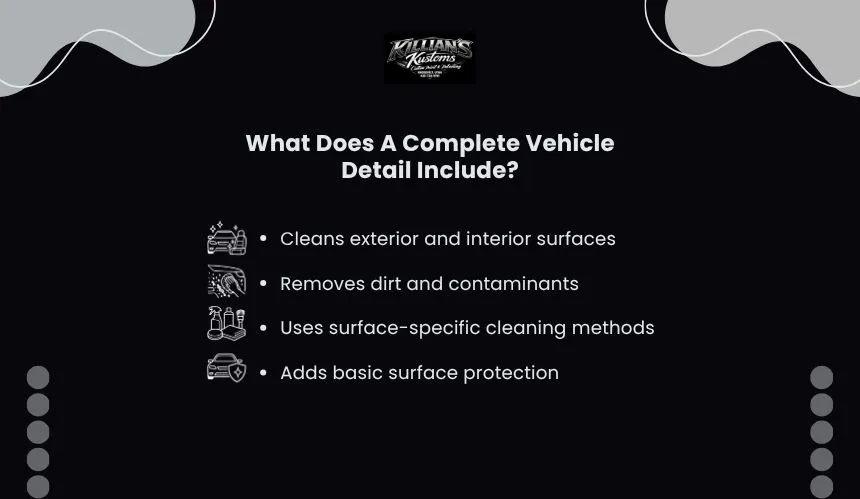
A complete vehicle detail typically combines thorough exterior cleaning, interior cleaning, surface decontamination, finishing, and basic protection. The exact scope depends on the detailing provider, vehicle condition, and package level.
Exterior Detailing Services
Exterior detailing starts with removing loose dirt, road film, brake dust, insects, and other contaminants from the vehicle’s painted and non-painted surfaces. Detailers typically clean the body panels, wheels, tires, wheel wells, grilles, badges, trim, and exterior glass using products matched to each material.
Unlike an automatic car wash, professional detailing focuses on controlled cleaning techniques that reduce unnecessary abrasion. Drying methods, wash tools, and chemical selection matter because incorrect processes can introduce swirl marks or leave contamination bonded to the paint.
Interior Detailing Services
Interior detailing generally includes vacuuming seats, carpets, floor mats, cargo areas, and accessible crevices. Hard surfaces such as the dashboard, center console, door panels, cup holders, vents, and trim are cleaned separately to remove dust, oils, fingerprints, and accumulated residue.
Fabric, leather, vinyl, plastic, and glass require different cleaning methods. A complete service should therefore use surface-specific products rather than applying one cleaner throughout the cabin.
Cleaning Versus Restoration And Protection
Cleaning removes dirt and contaminants, while restoration targets deterioration such as paint haze, oxidation, or heavily soiled materials. Protection adds a barrier intended to reduce future exposure to moisture, ultraviolet radiation, environmental fallout, and routine contamination.
These services should not be treated as interchangeable. A vehicle can be thoroughly cleaned without undergoing paint correction, stain restoration, or ceramic coating installation.
What Is Included In Exterior Vehicle Detailing?
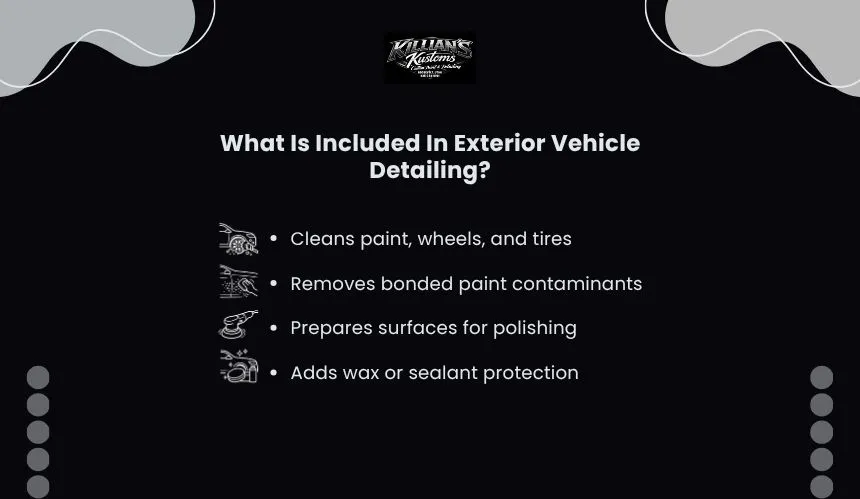
Exterior detailing addresses contaminants that ordinary washing may leave behind while improving the appearance and condition of paint, wheels, trim, glass, and other exposed surfaces.
Did You Know? Even after a vehicle looks clean, bonded contaminants such as iron particles, tree sap, and road tar can remain attached to the paint. Professional exterior detailing targets these residues before polishing or applying protective products.
Washing Wheels, Tires, Paint, And Exterior Surfaces
The process typically begins with a pre-rinse or pre-wash designed to loosen dirt before physical contact with the paint. Detailers then wash the body using controlled techniques intended to minimize friction and cross-contamination.
Wheels and tires are treated separately because brake dust, road grime, and iron particles can be more difficult to remove than ordinary surface dirt. Attention may also be given to wheel wells, emblems, fuel doors, grilles, panel gaps, and exterior trim where residue commonly accumulates.
Paint Decontamination
Even after washing, automotive paint may feel rough because industrial fallout, rail dust, overspray, tree sap, or other particles can bond to the clear coat. Chemical decontamination products can dissolve certain deposits, while a clay bar or synthetic clay media physically removes embedded contaminants.
Decontamination creates a cleaner surface for polishing, waxing, or sealant application. It can improve smoothness, but it does not correct scratches, swirl marks, or paint defects.
Paint Enhancement And Protection
Some complete detailing packages include light machine polishing to reduce minor haze, superficial oxidation, and very fine imperfections. More severe defects generally require dedicated paint correction involving additional polishing stages.
After preparation, a wax, synthetic sealant, or similar protectant may be applied. These products enhance gloss and provide temporary protection against environmental exposure, but their durability and performance differ from professionally installed ceramic coatings.
What Is Included In Interior Vehicle Detailing?
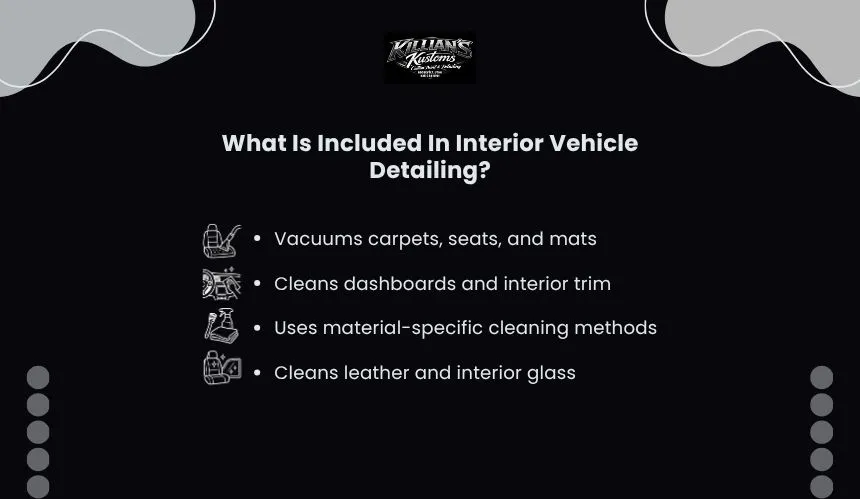
Interior detailing targets accumulated dirt across multiple materials and high-contact surfaces. Effective cleaning depends on matching the method to the material and the type of contamination present.
Important: Using the wrong cleaner or too much moisture can damage leather coatings, screens, plastics, adhesives, and upholstery. Interior detailing should match the chemical and cleaning method to each surface rather than treating the entire cabin the same way.
Carpets, Mats, Seats, And Upholstery
Detailers usually begin with thorough vacuuming to remove loose debris before wet cleaning. Floor mats may be cleaned separately, while carpets and fabric seats can receive spot treatment, shampooing, steam treatment, or extraction depending on their condition.
Deep extraction is not always necessary. Excess moisture can increase drying time and may create odor or mildew concerns if fabrics remain damp, so professional detailers select the least aggressive process capable of producing the required result.
Dashboard, Console, Doors, And Interior Trim
Dashboards, door panels, consoles, vents, switches, cup holders, and storage compartments collect dust, skin oils, food residue, and product buildup. Brushes and detailing tools allow technicians to reach seams and textured areas that ordinary wiping may miss.
Cleaning chemicals should be compatible with plastic, vinyl, coated trim, screens, and sensitive finishes. Gloss-enhancing dressings are not automatically appropriate, particularly on surfaces where glare or a greasy finish can reduce usability.
Leather, Glass, And Interior Finishing
Leather surfaces are generally cleaned with products designed to remove oils and grime without damaging protective coatings. Conditioning may be applied when suitable for the specific leather type, although modern coated automotive leather does not always require heavy conditioners.
Interior glass is cleaned separately to remove fingerprints, haze, and residue. The detail should conclude with a visual inspection of seating edges, pedals, mirrors, door jambs, storage areas, and other locations where contamination is easily overlooked.
What Services May Not Be Included In A Standard Complete Detail?
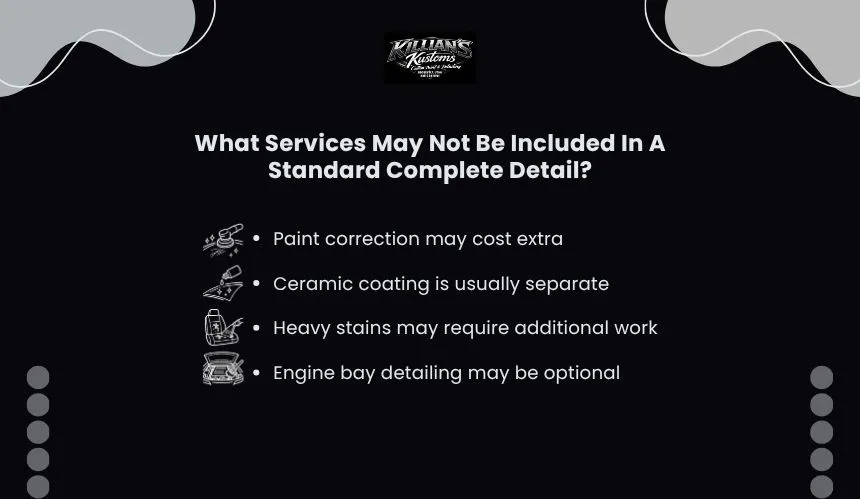
The word “complete” can be misleading because many labor-intensive corrective or specialty services are priced separately. Confirming exclusions before booking prevents misunderstandings about expected results.
Paint Correction And Scratch Removal
Paint correction uses abrasive polishing to reduce clear-coat defects such as swirl marks, water-spot etching, oxidation, and light scratches. It requires more time, inspection, and paint-safe technique than routine detailing.
Deep scratches that penetrate through the clear coat cannot simply be polished away. Those defects may require touch-up paint, refinishing, or body repair rather than detailing.
Ceramic Coatings And Advanced Paint Protection
Ceramic coating installation is generally separate from a standard detail because the coating requires extensive preparation and controlled application. The paint may need decontamination, polishing, surface cleansing, and inspection before the coating is applied.
Wax and sealant provide shorter-term protection and are more commonly included in detailing packages. Ceramic coatings are designed for longer durability but should not be assumed to be part of a complete detail unless specifically listed.
Heavy Interior Or Specialty Cleaning
Excessive pet hair, severe stains, smoke contamination, persistent odors, mold concerns, or biological residue can require additional labor, specialized chemicals, or dedicated equipment. These conditions are frequently subject to surcharges or separate service categories.
Engine bay detailing may also be optional because electrical components, sensitive materials, and vehicle-specific layouts require controlled cleaning methods.
What Factors Change What A Complete Detail Includes?
Detailing packages vary because vehicle size, condition, materials, and service standards directly affect labor requirements and treatment methods.
Vehicle Size And Configuration
Larger SUVs, pickups, vans, and three-row vehicles usually require more cleaning time than compact cars because they contain greater surface area and interior volume. Cargo compartments, third-row seating, complex storage areas, and large wheel assemblies can further increase labor.
Pricing and service duration may therefore be based partly on vehicle category rather than using one fixed rate for every vehicle.
Vehicle Condition
A routinely maintained vehicle generally requires less intensive treatment than one with embedded dirt, neglected paint, heavy staining, pet hair, or accumulated contamination. Condition influences the equipment, chemicals, and labor needed to achieve an acceptable result.
For this reason, some detailers inspect the vehicle before confirming the final price or recommending a package.
Detailer Package Definitions
There is no universal industry checklist that makes every “complete,” “full,” or “premium” detail identical. One provider may include clay treatment and wax, while another may charge separately for those services.
Compare the actual service list rather than relying on the package name. Specific inclusions provide a more accurate basis for evaluating value.
How To Tell Whether A Complete Vehicle Detail Is Worth It
A complete detail delivers the most value when the package matches the vehicle’s actual condition and the owner’s expected outcome. The decision should be based on required services rather than the longest package description.
Quick Tip: Before booking, compare the package inclusions against your vehicle’s actual problem areas. A shorter service list that directly addresses stains, paint contamination, pet hair, or surface protection can provide better value than a broader package filled with unnecessary extras.
Check The Exact Service List Before Booking
Ask whether the package includes paint decontamination, wheel cleaning, carpet treatment, upholstery cleaning, leather care, polishing, exterior protection, and specialty stain removal. Clarify which services involve additional charges.
This prevents situations where a customer expects paint correction or deep stain removal from a package designed primarily for routine cleaning and maintenance.
Match The Detail To The Vehicle’s Condition
Well-maintained vehicles may only need periodic interior cleaning, exterior decontamination, and renewed protection. Neglected vehicles may require extraction, odor treatment, intensive pet-hair removal, or corrective polishing.
Choosing a service based on condition prevents paying for treatments the vehicle does not need while ensuring problem areas receive sufficient attention.
Know What Results A Detail Can Realistically Deliver
Professional detailing can clean, refine, and protect many automotive surfaces, but it cannot reverse every form of physical damage. Torn upholstery, chipped paint, deep scratches, cracked trim, corrosion, and failed clear coat typically require repair rather than cleaning.
A worthwhile complete detail should therefore have a clearly defined scope, appropriate treatment methods, and realistic expected results. When those elements are transparent, it becomes much easier to compare detailing packages and choose the service that provides meaningful value for the vehicle.
Frequently Asked Questions
How Often Should You Get A Complete Vehicle Detail?
Most daily-driven vehicles benefit from a complete detail every three to six months, although usage, climate, storage, pets, children, and commuting conditions can change that interval. Regular maintenance detailing prevents contamination from becoming deeply embedded, making future interior cleaning, paint decontamination, and surface protection less labor-intensive.
Should I Remove My Belongings Before Taking My Car In For Detailing?
Removing personal items from door pockets, consoles, cup holders, seat pockets, and the cargo area gives the detailer unobstructed access to surfaces that need cleaning. It also reduces the risk of valuables being misplaced and prevents technicians from having to decide which belongings can safely be moved.
How Long Does A Full Car Detail Usually Take?
A complete vehicle detail commonly takes several hours, but the actual service time depends on vehicle size, contamination level, interior condition, drying requirements, and selected treatments. Deep carpet extraction, pet-hair removal, paint polishing, or extensive decontamination can extend the appointment because those processes require additional preparation and inspection.
Is It Better To Detail A Car Before Selling Or Trading It In?
Detailing before a sale or trade-in can strengthen presentation by removing visible grime, odors, stains, and neglected surface buildup that may make the vehicle appear poorly maintained. The strongest return usually comes from cleaning noticeable defects rather than purchasing expensive corrective services that may not significantly increase the final offer.
Can I Drive My Car Immediately After A Full Detail?
Normal driving is usually possible immediately after routine detailing, but certain treatments may require additional care. Damp upholstery needs adequate ventilation, while newly applied sealants, coatings, or specialty protectants may have curing restrictions. Following the detailer’s aftercare instructions prevents water, friction, or contamination from interfering with the finished surfaces.
Should I Get My Car Detailed Before Or After A Long Road Trip?
Detailing after a long road trip generally provides greater cleaning value because highway travel can introduce insect residue, road film, brake dust, food debris, and cabin contamination. A pre-trip detail still makes sense when paint protection is needed beforehand, particularly when the vehicle will face extended sun exposure or difficult driving conditions.
Does Professional Detailing Help A Car Maintain Its Resale Value?
Consistent detailing can support resale value indirectly by preserving the condition and presentation of paint, trim, upholstery, carpets, and other visible surfaces. It cannot prevent mechanical depreciation, but minimizing staining, embedded contamination, oxidation, and cosmetic neglect can make the vehicle more appealing during inspections, listings, and buyer negotiations.